
Our family’s travel bucket list is impressively long—and, of course, COVID restrictions haven’t exactly helped shorten it. Still, we already had several trips in mind, just waiting for the right moment. A Portugal getaway had been on our radar for a couple of years, and finally, we made it happen.
We knew that traveling during COVID would mean extra rules and precautions, but it also promised fewer crowds and better prices. In the end, spending a week of the October school holidays exploring Portugal still felt like a fantastic idea. To make the most of our time, we planned a round-trip itinerary: flying into Lisbon and out of Faro, allowing us to see as much of the country as possible.
From Nice Airport, the only direct flights were to Lisbon. To return from Faro, we opted for Marseille Provence Airport, just under two hours away. We hadn’t flown from Marseille much—only a trip to Morocco back in 2011—but Ryanair offered plenty of European destinations. It had also been a while since we flew with Ryanair, but for short European flights under two hours, it seemed perfectly manageable.
Parking at Marseille Airport for a week cost only 36 euros—a real bargain. Following all the rules, the Ryanair experience was smooth. We opted for the family pack, which included two large and two small suitcases, printed our boarding passes ahead of time, and encountered no issues at all.
Lisbon and around
Our two-hour flight from Marseille to Lisbon went smoothly. The plane was completely full, but after so many trips during COVID, we were well accustomed to the routine—masks on, tray tables and armrests disinfected. Ryanair’s seats were a bit snug, but for a short flight, it was perfectly manageable. We landed in Lisbon late in the afternoon and grabbed a Bolt cab to our accommodation in the city center for a very reasonable 17 euros.
We were staying at Lisbon Art Stay Apartments, just steps from the Santa Justa Elevator, right in the heart of the city. Our two-bedroom apartment was spacious, colorful, and full of charm—the perfect blend of comfort and character tucked into a historic building. It immediately felt like a home base from which to explore the vibrant streets of Lisbon.
At the colourful lobby of the Lisbon Art Stay

Our multicoloured apartment


After checking in and quickly dropping off our bags, we went for a stroll to soak in the city and find dinner. A small family-run restaurant nearby served a delicious meal of paella and bacalhau—the traditional Portuguese dried and salted cod that appears in so many local dishes.


The next morning, we woke to the sound of rain. Undeterred, we stuck to our plan to pick up our rental car and drive north to Nazaré. Breakfast was included with our stay, served in the hotel’s bar and restaurant area. The space was as colorful and funky as the rest of the hotel, with live music in the evenings. While Tripadvisor reviews mentioned a buffet, COVID had changed the setup. Instead, we ordered from the menu, which offered a wide selection of tasty dishes, including several vegetarian options. Their avocado on sourdough toast was a particular highlight.
We rented a car from Hertz for the day to drive the roughly 120 km to the famous surfing village of Nazaré. The journey took about an hour and a half, but it soon became clear the weather wasn’t on our side—it was pouring rain and showed little sign of letting up.
Nazaré is a charming seaside village, popular with tourists and famous for its surfing. The enormous waves, created by the underwater Nazaré Canyon, have set multiple world records and attract surfers from across the globe. While we weren’t lucky enough to see the giant waves that day, the beach itself was still stunning. A 500-meter walk from the parking lot to the lighthouse left us soaked, but it was worth it. For just one euro, we explored the lighthouse, a small surf museum, and an exhibition explaining why Nazaré’s waves reach such incredible heights.


Soaked and chilled from our visit to Nazaré, we made a stop in the village of São Martinho do Porto on the way back to Lisbon. A warming bowl of fish soup in a lovely beachfront restaurant was exactly what we needed. The portions were enormous—one soup easily served two people, leaving us full and satisfied.

By the time we returned to Lisbon, the rain had stopped, and the evening looked inviting. We set out to explore the city on foot. Lisbon is wonderfully walkable, though the streets often involve steep climbs or descents. The city also has an impressive network of stairs and lifts to help navigate the hills, the most famous being the Elevador de Santa Justa, which connects the lower streets of the Baixa neighborhood with the higher Largo do Carmo.
Wandering through the softly illuminated streets that evening, we quickly fell in love with Lisbon’s charm and character. Every corner revealed colorful tiles, quaint cafés, and lively squares—reminding us why the city has such a magnetic allure for visitors.

Views from the top platform of Santa Justa Lift


That evening, we had dinner at the Lisbon Time Out Market, located in the historic Mercado da Ribeira. The old market hall has been transformed into a vibrant food court, with stalls representing some of Portugal’s top Michelin-starred chefs, including Alexandre Silva and Henrique Sá Pessoa. We were truly spoiled for choice, and in the end, each of us picked something from a different stall. With so many delicious options, it was impossible to go wrong—everything we tried was excellent.


The next morning, sunlight streamed through our window blinds, a promising start for a day of sightseeing. After breakfast at the hotel, we hopped on the famous tram number 28, a classic Lisbon experience. Riding the quaint yellow tram as it rattled and squeaked through the narrow streets was unforgettable. Route 28 still uses historic trams from the 1930s, as the tight turns, steep hills, and narrow streets of the route are unsuitable for modern vehicles. The journey offered a charming, slightly bumpy glimpse of the city’s colorful neighborhoods and iconic architecture.


Lisbon’s charm is everywhere, from the lively streets to the facades adorned with azulejo tiles, each neighborhood offering its own colorful patterns and stories. Walking through the city, it quickly became clear that comfortable shoes are essential—every corner reveals something new, and the city’s hills provide stunning viewpoints at every turn.


Lisbon has an irresistible energy and character, and after just a couple of days, we already knew we would return. There’s a rhythm to the streets, a mix of history, culture, and everyday life that makes exploring the city feel endlessly rewarding.
Sao Bento Palace, the seat of Portugese Parliament


We called it an early night, knowing that the next morning would start with picking up our rental car to drive to Évora in central Portugal, before continuing south to the stunning Algarve coast.
Evora and the Southern coast of Portugal
Thanks to COVID restrictions, car rental prices in Portugal were surprisingly reasonable. We had reserved a BMW 3 Series from Sixt, but were pleasantly surprised with a complimentary upgrade to a Mercedes C-Class. Our plan was to drop the car off at Faro Airport for our return flight, which came with a small additional fee of 60 euros.
With the GPS set for Évora, we said goodbye to Lisbon and headed out of the city, crossing the impressive Vasco da Gama Bridge. This cable-stayed bridge, flanked by long viaducts, spans the Tagus River and is the longest bridge in the European Union—and the second longest in all of Europe—stretching an astonishing 12.3 kilometres. Built to allow traffic between Portugal’s northern and southern regions to bypass the capital, it offered a smooth and scenic start to our road trip, giving us a first glimpse of the landscapes awaiting us in central Portugal.

One of the town’s most famous—and unusual—attractions is the Capela dos Ossos, or Bone Chapel. Built by Franciscan monks, the chapel’s interior walls are decorated with human skulls and bones. An estimated 5,000 corpses, exhumed from Évora’s medieval cemeteries, were used to create this macabre yet fascinating display. It serves as a stark, thought-provoking reminder of the town’s long and layered history, and is an experience unlike anything else we had seen.


We also visited the magnificent Évora Cathedral, the largest medieval cathedral in Portugal. Climbing to the rooftop viewing platform rewarded us with stunning panoramic views over the surrounding landscapes, making the effort more than worthwhile.
Beyond the major sights, we loved simply wandering through the narrow streets of the town center, discovering hidden corners, and enjoying a leisurely lunch at one of the charming local restaurants. There’s something truly special about soaking in the atmosphere of a historic town like Évora, where every street seems to tell a story.


For our stay in the Algarve, we had chosen the small seaside town of Praia da Luz as our base. The drive from Évora took about two and a half hours, and we were excited to check into the Baía da Luz apartment hotel. We were pleasantly surprised by the apartment—spacious, modern, and spotlessly clean. It featured a large living room with access to a terrace, a fully equipped kitchen, a bathroom, and two bedrooms (one en suite) on the entrance level, plus another large bedroom with an en suite bathroom and sun terrace on the upper level. Unlike many vacation apartments, our space was cleaned every other day, and the Rituals toiletries in the bathrooms added a luxurious touch.
The apartment was just a five-minute walk from the beach and the lively promenade, lined with cafés and restaurants. There was also a heated swimming pool in the courtyard. We enjoyed it so much that we ended up having takeaway dinners on the terrace each night, soaking in the sunset views instead of dining out.
On our first day exploring southern Portugal, we headed to Cabo de São Vicente (Cape St. Vincent), the extreme southwestern point of continental Europe, near the village of Sagres. A well-maintained hiking trail runs around the cape, protected by a low barrier to prevent venturing too close to the dramatic cliffs, which rise 60 to 80 meters above the Atlantic. The views from the edge are absolutely breathtaking. Entrance to the cape is through a small fortress and lighthouse complex, operated by the Portuguese Navy, adding a historic touch to the natural spectacle.


Before heading back to our apartment, we made a quick drive to the town of Lagos, just ten minutes from Luz, to stock up on groceries. Since our apartment rental didn’t include meals, it was lovely to enjoy morning coffee and breakfast on our terrace each day. Luz itself is a small town with only a few shops, so visiting Lagos with its larger supermarkets offered much more choice—especially for plant-based milks and other specialty items. I always enjoy exploring grocery stores abroad, discovering local and imported products. The Algarve has a sizable British community and many British tourists, so we noticed plenty of UK brands on the shelves. While in Lagos, we also strolled through the old town and along the beach, soaking in its charming, slightly touristic atmosphere.
Back in Luz, the kids headed straight for the apartment pool, as the late-October weather was unexpectedly warm. Later, we walked along the beach promenade and decided to climb the rocky outcrop overlooking the town and beach. From the top, we were rewarded with stunning views of the coastline and watched the sun sink into the Atlantic—a peaceful, picture-perfect end to the afternoon.


Sunset over Praia da Luz


The next morning, we set out to explore one of the Algarve’s most famous natural wonders: the Benagil Cave. The best way to experience it—and the region’s stunning coastline—is by boat. We joined a two-hour tour departing from Carvoeiro, a charming seaside village with its own scenic coastal hiking trail starting right from the beach. Arriving early, we took a stroll along the trail and were immediately impressed by the Algarve’s network of well-marked, well-maintained routes. The Carvoeiro trail alone is worth a visit for anyone who loves a mix of ocean views and cliffside walks.


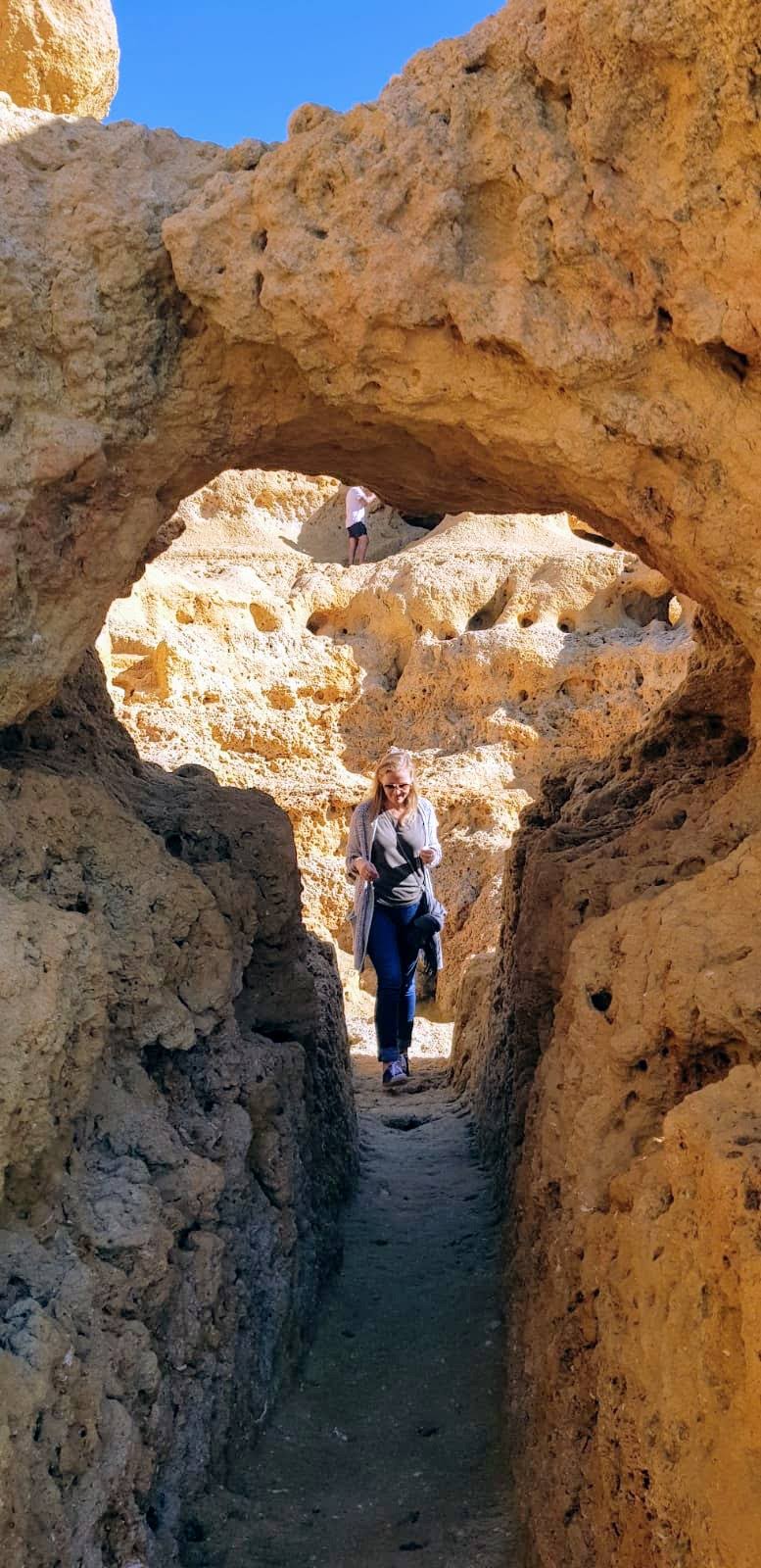


Our boat tour was intimate and relaxed. Apart from our family, only two other couples joined us—just eight passengers plus our friendly driver/guide. The journey began with a slow, scenic ride along the coastline, exploring several hidden caves, followed by a quicker thirty-minute dash back from the last cave to Carvoeiro. At 25 euros per person, it felt like a real steal for such a unique experience.
The coastline was breathtaking. Dramatic cliffs towered above secluded beaches, and we passed about ten caves, each more captivating than the last. Seeing the Algarve from the water gave a completely different perspective than from land, and the clear skies and warm sunshine at the end of October made it even more magical. On the way back, the boat picked up speed, and the brisk wind was a reminder that autumn had arrived—but the spectacular views made it all worth it.


After our boat adventure, we drove to the nearby town of Albufeira for a late lunch. The town had a slightly faded tourist-town vibe—many bars were closed, likely due to lingering Covid restrictions—but the beach was beautiful, and there were still plenty of restaurants to choose from. It was a relaxed, sun-soaked afternoon, perfect for unwinding after a morning on the waves.
The following day, with the Atlantic winds promising big waves, we headed to Bordeira to watch the action. Surfers in camper vans lined the beaches, waiting for the perfect break. The coastline here is wild and untamed, dotted with small, secluded beaches and dramatic rock formations. Walkways and viewing platforms along the cliffs made it easy to take in the scenery safely, offering a spectacular vantage point over the roaring Atlantic.


It was our final day in Portugal, with a flight from Faro to Marseille scheduled for the next morning. Reflecting on the trip, we realized just how much we had fallen in love with the country. Lisbon, with its vibrant streets, colorful trams, and azulejo-covered buildings, had left an unforgettable impression. The Algarve, with its towering cliffs, hidden beaches, and sparkling turquoise waters, was equally breathtaking.
We were enchanted by the easy-going friendliness of the Portuguese, the calm and space of the smaller towns, and the incredible food—sometimes so generous it was impossible to finish! Portugal felt accessible, affordable, and endlessly rewarding to explore. Finally ticking off a long-held family bucket-list trip, even amid travel restrictions, made the experience even sweeter.
One thing was certain: this would not be our last visit. Portugal has so much more to offer, and we can’t wait to return.


